Showing posts with label Digitization. Show all posts

Thursday, February 7, 2008

The Latta Family Papers @ UNC


The Latta Family Papers
Special Collections, Atkins Library – University of North Carolina at Charlotte

1. Collection Principles

The Latta family are descendents of a 16th C. Irish immigrant, James Latta, who became a successful merchant and farmer in North Carolina. The eleven letters dating from 1824 – 1830, help to offer a glimpse into the lives of James Latta and his family. They were donated to the Atkins Library in 1997 by a descendent of the Latta family. This fits into the collections’ aim to gather information on the history of North and South Carolina.

2. Metadata

In the exhibit each letter is transcribed detailing the addresses, narratives and signatures. Each transcript is interspersed with scanned images of the letter it matches. Other than the date of each letter no other metadata is closely linked to each item of the exhibit. A link to an inventory gives further bibliographic information about the papers as a group, including copyright and access issues.

3. Object Characteristics

Some information is provided about the digitization process for this exhibit. Specifically, the documents were scanned on a HP ScanJet 6100C flatbed scanner using Corel Photo-Paint 6 in a tiff format at 300dpi. It is also mentioned that the images viewed on the website are jpeg versions with a 100dpi resolution.

4. Intended Audience

Through its Manuscript Collection, the Atkins Library provides access to primary source materials pertaining to the Carolinas, particularly the Charlotte/Mecklenburg area. The major audience for this exhibit consists of the researchers and scholars of American studies of these states.


DJ_Fraser_Post_3

Wednesday, January 30, 2008

Collect: Obessive, Passionate, Visionary

Collect: obsessive, passionate, visionary
Online Exhibition – National Library of New Zealand

1. Collection Principles

This online exhibit takes a look back at the collecting history of the Alexander Turnbill Library – one of the major libraries of the National Library of New Zealand. It is an online excerpt of a larger real-life exhibition. The 13 images presented online, dating from 1890 to 2006, are accompanied by text relating them to library’s collection. No reason is given as to why these particular images were chosen for the online exhibition.

2. Object Characteristics

These images are of varying sizes and resolutions. They cannot be enlarged for better viewing (disappointing especially for the text-based objects). It is not known what standards were used during the digitization of the exhibition objects.

3. Metadata

All the images carry titles, original dates, publication information and a reference number/code. No other data is provided regarding the digitization process used for the objects. At the bottom of each page is a statement of use for all images from the exhibition.

4. Intended Audience

This exhibition appears to be designed for general users rather than researchers. This is especially indicative of the low resolution of the images.

DJ_Fraser_Post_2

Sunday, January 27, 2008

Estonia's Digital Art Museum


The Digital Art Museum is a work in progress, just as the physical Art Museum of Estonia was in flux for many years.


Collection Principles


They do not have any guidelines available. The museum has begun with modern works, and is adding to the online collection going backward in time. The works are under copyright and you must register to buy prints or access other features. Browsing is free however. Funding has been provided by The European Commission for the present, no other information has been provided.
While there was a link to Web statistics, it required a password, but it seems they are keeping track of use.
According to the About Page, the curators of the museum are using a Translate framework, which means as far as I can tell that they are involved in culture dissemination, in this case Estonian Art.

Object Characteristics

The museum has included digital photographs of Sculpture, paintings, drawings, graphic art, and photo/video art. They use both JPG and TIF files, usually JPG I believe, I see no order to it. It is possible to enlarge most images one time.


Metadata


Information on the original object such as artist, medium, and date created are included as well as dimensions. Data about the file is in the form of file type, compression, file size, and resolution are all provided.

Intended Audience

According to the home page, "Digital Art Museum provides access to the works in the collection of Art Museum of Estonia to both Estonian and international contemporary art public and researchers."

Thursday, January 24, 2008

British Library's Archival Sound Recordings

Archival Sound Recordings
Sound Archive – British Library

Collection Principles
The aim of the Archival Sound Recordings (ASR) project is to increase access to the collections of the Sound Archive at the British Library. A compiled list of the status of intellectual property rights for each recording on the site is available for download. The site is accessible to persons with disabilities. It appears that the choice of sounds digitized was decided through consultations with the user community and validation by a panel of experts. The recordings include traditional and classical music, oral histories, public talks and debates and soundscapes.

Object Characteristics
For the digitization process, ASR adhered to the standards of the IASA (International Association of Sound and Audiovisual Archives). In particular the followed TC04 Guidelines on the Production and Preservation of Digital Objects. ASR followed the Sound Archive’s conventions for naming digital audio files. Each unique identifier is also designed to be accommodated in the platform of the Library’s online catalogue.

Metadata
Selecting an audio recording brings the user to a page with a short list of metadata: duration, composers, performers and related objects. At the bottom of the list is a chance to view the full metadata record for the digital object. This entails an XML file based on Metadata Encoding and Transmission Standard (METS) which incorporates legacy information, digitization process, audio segmentation and descriptive data encoded in Dublin Core.

Intended Audience
Anyone with internet access can search and browse the site. However the audio playback/download access password encrypted and is limited to Higher and Further Education staff and students of the UK. This access is also provided on the premises of the British Library. This restriction is probably born out of funding and licensing/copyright issues. The project also plans to create case studies showing how users can engage with the materials of the ASR site. It is hoped that this will increase usage and exploration of ASR.

DJ_Fraser_Post1

Wednesday, January 23, 2008

Digital Morphology at the University of Texas at Austin


Go see it here.

1) Collection Principles: As a part of the National Science Foundation Digital Libraries Initiative, UT Digimorph (their nickname) has a broad range of interests, which seem to lie more in the exploration of the medium they are using than in specifically what information they are making available. As the authors put it, "At present, our broadest common interest is the manipulation, interpretation, and dissemination of high-resolution X-ray CT datasets, and the associated problem of assembling and serving libraries of large-volume digital datasets."
The archive is meant for personal education; it is not meant for commercial use without written consent.

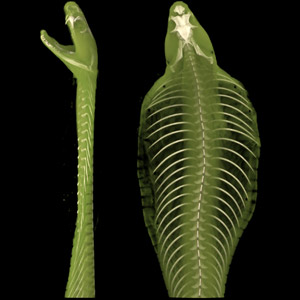
2) Object Characteristics: Another internet only project: custom built, high-resolution X-ray CT scans of "the Earth's biota" are coupled with descriptions (see below). Major categories include dinosaurs, tapirs, horned lizards, endocasts, bats, and primates. Every specimen, from sea urchin to platypus has several viewable angles, complete with short movies of rotation. The images are high quality.

3) Metadata: For each species the staff at Digimorph has included a paragraph or two about the species and specimen. Links to literature and other information are also provided so that users can learn more about specimens. It is also easy to find information on who provided, scanned or processed the specimen. Users can view the specimens from just about any angle, and see movies of different slices. Sometimes other images are provided, like a picture of what the specimen would look like if you met it in Africa.

4) Intended Audience: They appear to intend it for students and research scientists, but also for a more popular audience. They are proud to have been featured in National Geographic, NOVA, The New York Times, and BBC's Horizon, among others.

Minnesota’s Greatest Generation – Share Your Story

“Share Your Story” is one component of the Minnesota Historical Society’s “Minnesota’s Greatest Generation” project, which aims to collect and preserve the stories of MN individuals living through the “generation defining” decades of the 30’s, 40’s and 50’s. It was publicly launched in August 2005 (60th Anniversary of VJ Day).

1) Collection Principles: stories that adhere to the project mission are submitted by the general public and reviewed by the MNHS editing staff. Once submitted, the MNHS reserves non-exclusive rights to all written, photographic, sound or a/v material for the duration of the project, including publication/broadcast, etc. (authors/filmmakers will retain original copyright to their work). The intent is to provide a way for individuals to share their story with a broader public and to collect archival and research materials for future generations.

2) Object Characteristics: This is an internet-only project--all text, image and a/v files are submitted online. Images consist of a thumbnail and larger image (typically 300-500 px square), which can be saved, but are only screen resolution. A/V files play directly from the web page (I don’t know enough to try to get around it); you can “email to a friend,” which sends a link to the page. Pages with audio files include transcripts. The oral history and movie pages I looked at were either made by the MNHS staff or submitted through a movie competition, which was another component of the Minnesota’s Greatest Generation project. These were of very good quality. Some of the images in the Virtual Resources Database are zoom-able.

3) Metadata: all stories are edited by MNHS staff and entered into a searchable database (search by category or keyword or browse story/image archives) and placed on the website. Data includes: main character, gender, hometown, date & location of story, author, connection of author to main character, creation date and individual ID#. Image data includes file size, resolution, alt text (eg: Mike pitching horseshoes – known as “barnyard golf”).

4) Intended Audience: anyone with a “Minnesota Connection” or interest. The site can be browsed, is suitable for research purposes, and “teachers tools” are available for grades 4-12.

"The project encompasses Preserve Your Family History which includes oral history interviews and preservation workshops, Share Your Story which is a way for families to collect and to share written stories, In Their Words tells the stories of the Greatest Generation through an interactive website, a three-year documentary film competition called Making a Movie: Moving Pictures, RetroRama an evening of music, martini’s and ‘50s inspired retro fashion by local designers, and publications, educational outreach efforts, public programs, and a collecting initiative. "Our Stories, Our Lives", a 6,000-square-foot exhibit will open at the Minnesota History Center in late August 2008. It is expected to remain on view for ten or more years. "

rah post 01